Water & Wastewater Consultancy
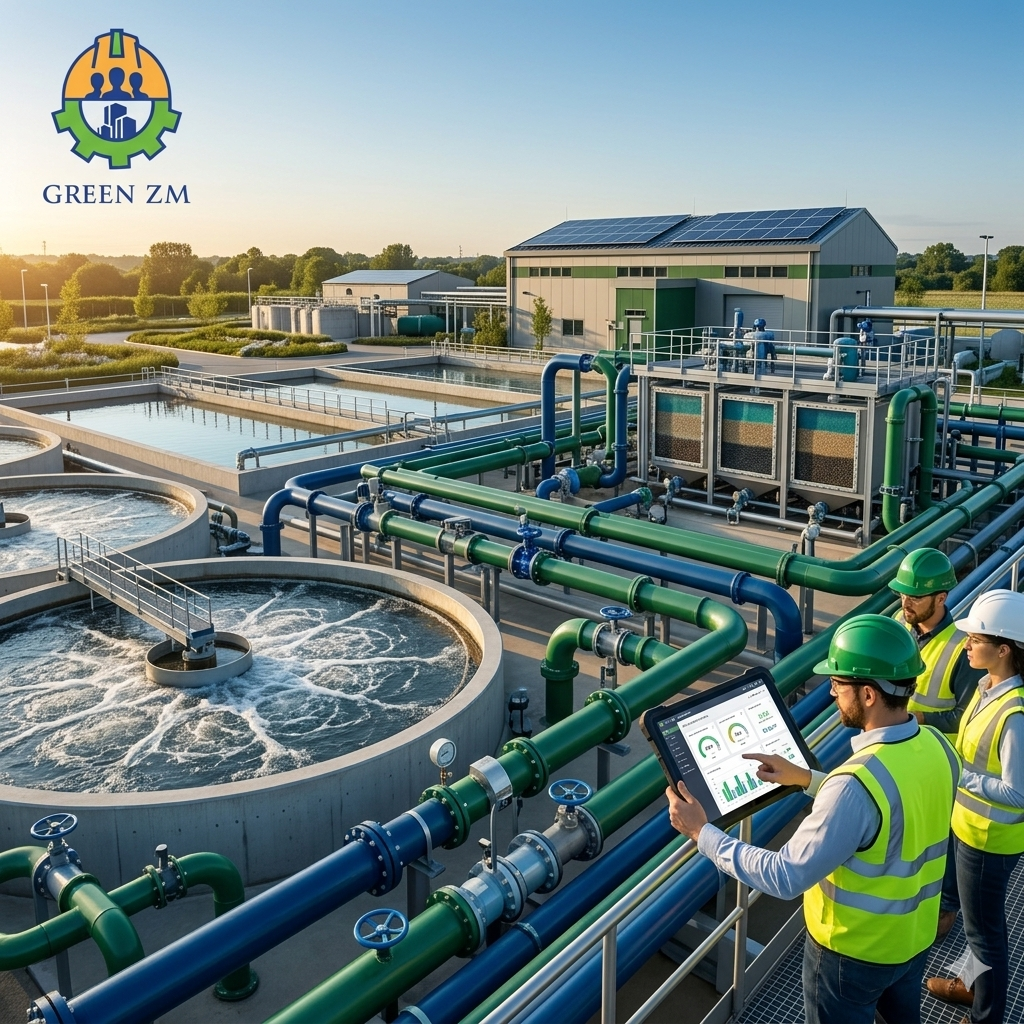
Treatment Process Steps
- Screening and Pumping
- Grit Removal
- Primary Settling
- Aeration / Activated Sludge Process
- Secondary Settling
- Filtration
- Disinfection & Oxygen Uptake
Process Flow Components
Primary Treatment
Raw sewage → screens → comminutor → grit chamber → grit disposal → primary clarifier → raw/primary sludge
Secondary Treatment
Aeration tank → air compressor → return sludge → return sludge pump → secondary clarifier → activated sludge → disinfectant → secondary effluent → discharge to surface water (or tertiary treatment if required)
Sludge Treatment & Disposal
Proper sludge handling, treatment, and environmentally safe disposal methods are implemented to ensure compliance with environmental standards and sustainable wastewater management practices.
Methodology
Wastewater treatment is the process of removing impurities from wastewater (sewage) before it is discharged into natural water bodies such as rivers, lakes, estuaries, oceans, or groundwater systems.
Since pure water does not exist naturally outside controlled environments, water quality is defined based on the level of impurities present and its intended use (drinking, industrial use, recreation, etc.).
Water is considered polluted when it contains contaminants that make it unfit for its intended purpose. Although some water pollution occurs naturally, most pollution is caused by human activities, especially the discharge of untreated or partially treated wastewater.
Therefore, wastewater treatment plays a critical role in water pollution control by ensuring safe discharge and protecting environmental and public health.